


For decades, the center of gravity in global M&A sat firmly in New York and London. That is no longer the full picture. Capital, ambition, and opportunity are moving east. Asia-Pacific has become one of the most closely watched regions for dealmakers anywhere in the world.
Regional deal volume topped US$750 billion in the first half of 2026 alone, up roughly 30% year-on-year, with investors especially drawn to digital infrastructure and healthcare. Even as global dealmaking becomes more selective — fewer, larger transactions rather than a high volume of smaller ones — Asia-Pacific’s share of global deal volume has climbed to around 37%.
This growth is driven by stronger activity in China, Japan, and pockets of Southeast Asia.
The professionals who structure and close these deals increasingly need to understand the region on its own terms, not as an extension of Western markets.
Why Singapore Sits at the Center
Ask any M&A professional working across Southeast Asia where the deal gets done, and the answer is often Singapore. A target company may sit in Jakarta, Ho Chi Minh City, or Manila. Even so, the transaction is frequently structured, financed, or managed out of Singapore.
The numbers back this up: EY-Parthenon‘s most recent Southeast Asia Private Equity Pulse found Singapore accounting for roughly 94% of the region’s private-equity deal value in early 2026. The same report found Singapore accounting for about 68% of the region’s deal volume over the same period.
This cements its position as the region’s dominant hub.
Legal analysts covering the market describe Singapore as functioning less like a symbolic headquarters. Instead, they describe it as more of a practical operating platform. It’s the place where capital, contractual certainty, and reliable enforcement converge for deals that span multiple Southeast Asian jurisdictions.
Private equity activity across the wider region has cooled somewhat from its 2024 highs. Bain & Company recorded roughly US$14 billion deployed across 84 deals in Southeast Asia in 2025.
But capital continues to concentrate disproportionately in Singapore-based structures even as overall volumes moderate.
Anchored by deep financial infrastructure, Singapore also benefits from a well-established regulatory regime. Together, these continue to make it the region’s primary origination and structuring center for cross-border deals.
The Lessons Hiding in Plain Sight in Australia
While Singapore represents Asia-Pacific’s newer, faster-moving deal infrastructure, Australia offers something different: decades of mature market experience. Foreign investors poured into the country in 2025, with inbound deals accounting for 45% of total deal value. That’s up from 30% the year before.
This came even as overall deal value dipped slightly to US$79.5 billion.
More than half of Australian CEOs say they’re planning major acquisitions in the next three years. Many are explicitly targeting new capabilities rather than simple scale.
What draws that capital in isn’t just opportunity. Advisors point directly to Australia’s strong corporate governance and relative policy stability compared with other jurisdictions as a core part of the appeal.
Even so, an overhauled merger control regime adds real complexity to getting deals done. A more rigorous, risk-tiered foreign investment review process adds to that complexity as well.
For professionals newer to cross-border dealmaking, Australia’s experience is a reminder that long-term acquisition success rarely comes down to speed alone. It comes down to how rigorously a transaction has had due diligence, negotiated, and integrated after signing.
A Region That No Longer Fits in One Jurisdiction
Perhaps the clearest shift in the region is this: M&A professionals can no longer afford to think in terms of a single domestic market.
Regulators across the region are moving at different speeds and in different directions at once: Vietnam’s new Investment Law, taking effect in 2026, continues a trend of streamlining approvals and narrowing conditional business lines for foreign investors.
Meanwhile, Australia has enacted its most significant overhaul of merger control in decades and introduced a more risk-tiered foreign investment review process.
A transaction touching Singapore, Australia, and a target elsewhere in Southeast Asia can easily involve three or four distinct regulatory regimes and very different cultural approaches to negotiation.
The professionals succeeding today are the ones who can move fluidly between jurisdictions.
Why Technical Skill Alone No Longer Wins the Deal
That growing complexity has quietly redefined what “M&A expertise” actually means. Modeling a valuation or running due diligence used to be enough to prove competence; today it’s table stakes.
Legal practitioners tracking the region note that the market increasingly rewards advisors who understand not just the law, but how regulation, capital markets, and enforcement trends intersect with one another.
That intersection is becoming the defining space for modern dealmaking.
Financial fluency gets a deal to the table; broader strategic and cross-cultural fluency is what gets it closed — and makes it succeed afterward.
Learning as a Competitive Edge
Given how quickly the region’s deal landscape is shifting — new merger regimes, AI increasingly reshaping how deals get sourced, gets due diligence, and prepared for investment committees, and capital rotating into new sectors year to year — staying current has become essential.
It’s no longer just a nice-to-have but a professional necessity.
The dealmakers with the clearest edge tend to be the ones who make a habit of learning directly from practitioners working across different industries and jurisdictions. They compare notes on what’s happening in boardrooms and negotiating rooms across the region rather than relying solely on what worked in the past.
In a market this dynamic, continuous learning isn’t a supplement to experience; it’s becoming part of how experience is built.
Where These Conversations Are Happening
These are exactly the kinds of conversations playing out among M&A professionals gathering in Singapore this September. The IM&A Onsite Singapore program — running September 14–17, 2026 — brings together practitioners, faculty, and dealmakers from across the region for four days of exactly this kind of exchange.
They compare how deals are structured and closed across Southeast Asia, Australia, and beyond.
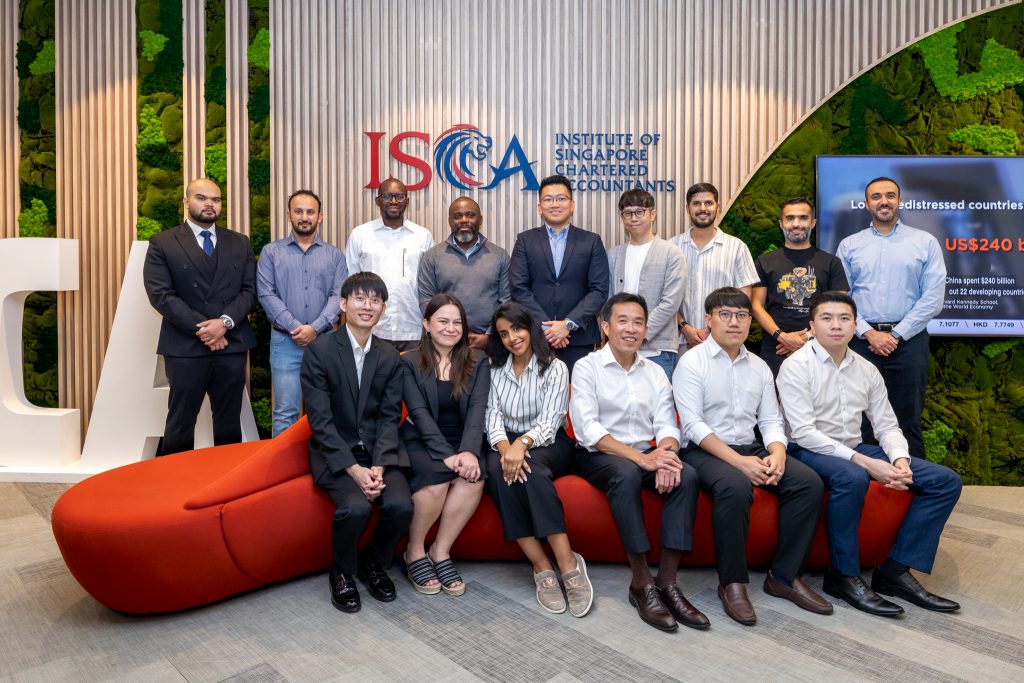
For professionals looking to sharpen both their technical grounding and their regional fluency, it’s one more example of where these discussions are happening in real time.




Stay up to date with M&A news!
Subscribe to our newsletter